


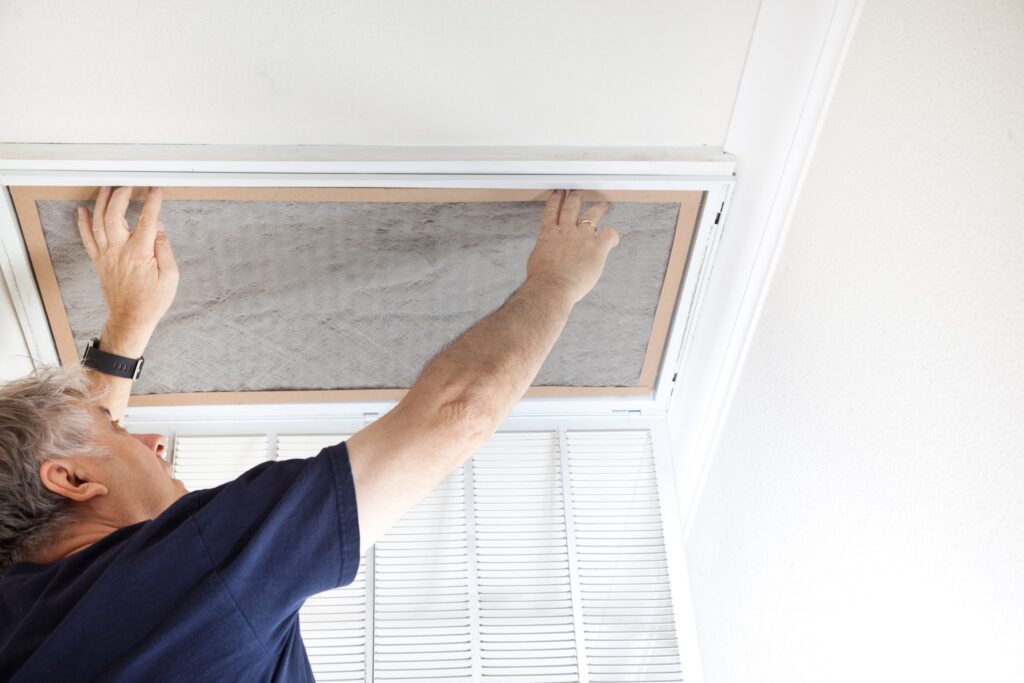
Regular HVAC air filter replacements are vital to ensuring your HVAC’s performance and efficiency. However, if you go to change your filter and find the existing one damp, it’s natural to feel concerned. Before you panic, however, you should know that there are multiple reasons for it to happen. Fortunately, not all of them warrant significant concern. In fact, our humid local climate makes damp filters a common occurrence here in Florida. Here’s everything you need to know about wet HVAC filters and what to do about them. And of course, if you’re still concerned, you can always call on the experts at Iceberg Home Services for help.
Is a Wet Air Filter Normal?
Your air filter should remain dry. However, if it doesn’t, that’s indicative of a problem with your HVAC system or ductwork. Some of the causes have simple fixes. Others are more serious. Regardless, discovering a wet HVAC filter should prompt you to investigate its cause. Our AC repair services cover anything your system might need.
What a Wet HVAC Air Filter Usually Means
Moisture in your HVAC air filter can only come from a few places. The cause may be the air in your home. Your HVAC system has limited dehumidification capacity. If your home has excessively high indoor humidity, it may overwhelm that capacity. Then, the still-moist air can wet the filter as your HVAC continues running. Another potential cause of the problem is if something’s interfering with airflow over your HVAC evaporator coil. That can lead to decreased dehumidification and a wet filter. And finally, the moisture may be caused by a leak in your HVAC or ductwork. In all three cases, it’s a good idea to have your HVAC inspected.
Common Causes of a Wet Air Filter
Most of the time, one of five common issues will turn out to be the cause of your wet HVAC air filter. Common causes of a wet air filter include:
- Condensate drain pan or line problems
- Frozen evaporator coils
- High indoor humidity
- Condensation on ductwork
- Oversized HVAC system
Safe Steps to Take Right Away
After discovering a wet HVAC air filter, there are a few things you should do. First, change the filter. Then check the outside end of your HVAC drain line to confirm that water is dripping from it. If so, proceed to check your HVAC vents and registers to ensure they’re all open and unobstructed. And finally, you can use a hygrometer to check your home’s humidity levels.
When to Call a Pro
If your HVAC air filter keeps getting wet and you can’t identify and eliminate the cause, you should call us. Also, if you start noticing musty smells in your home or mold growth, you’ll need one of our HVAC pros. They’ll find and fix the source of your moisture problem to eliminate those symptoms.
How to Prevent HVAC Moisture Issues
The simplest way to prevent HVAC moisture issues is to schedule regular AC maintenance and tune-ups, as per the manufacturer’s suggestions. In most cases, that means two annual professional maintenance visits for Florida homes. Those visits keep your HVAC clean and working properly. We offer maintenance memberships to make the process easy. You should also try to keep your home’s vents open and unobstructed at all times.
At the end of the day, there are simple solutions to many of the causes of a wet HVAC filter. However, it’s a good idea to have your HVAC inspected and, if necessary, given a tune-up to correct the issue.
To schedule service for your HVAC system, contact Iceberg Home Services in Winter Haven, FL, today.
Frequently Asked Questions
Here are some of the most common questions about wet HVAC filters, along with their answers.
Yes, it can. Persistent moisture anywhere in your HVAC can create the ideal conditions for mold growth. This is why it’s so important to respond quickly to moisture.
Ultimately, it depends on the amount of moisture. While a little dampness probably won’t do much damage, excessive moisture can create major problems. Call Iceberg Home Services at the first sign of moisture.
A clogged condensate drain will have little to no water dripping from its outlet when your AC runs.
Yes, anything that obstructs airflow through your HVAC can lead to a frozen evaporator coil.
Ideally, you want the humidity in your home to remain between 30% and 50%, year-round.
If the indoor humidity is frequently beyond your AC’s ability to control, you may want to inquire about whole-home dehumidifiers.