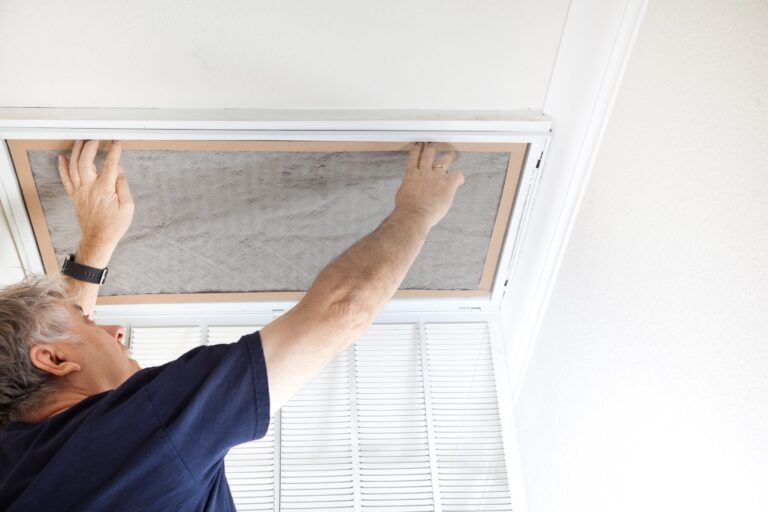


Ask most homeowners what indoor air quality means and they will point to the air filter. The filter matters, but in a Central Florida home it is rarely the whole story. The air inside your house is shaped by humidity, the condition of your ductwork, what is growing on your cooling coil, and what you bring into the house every day. Fix the right one and the house feels and smells different. Fix the wrong one and you can spend real money on equipment that never touches the actual problem.
Here is what actually drives air quality in a typical home from Orlando to Lakeland, and where to start if something feels off.
Humidity comes first in Florida
The EPA recommends keeping indoor relative humidity between 30 and 50 percent, and below 60 percent at a minimum. In Central Florida, where summer dew points regularly sit in the 70s, that is a constant fight. Once indoor humidity creeps above 60 percent, dust mites multiply, mold finds the moisture it needs, and the house starts to feel sticky even when the thermostat says 74.
Your air conditioner is your main dehumidifier. It pulls moisture out of the air as it cools, but only when it runs long enough. A system that is oversized for the home cools the air quickly and shuts off before it has removed much moisture, leaving a house that feels cool and clammy at the same time. Fan settings play a role too. Leaving the thermostat fan set to “on” can push moisture that collected on the coil right back into the house between cycles.
If your home stays above 55 or 60 percent humidity even with the AC working properly, a whole-home dehumidifier tied into your HVAC system is usually the most direct fix. It handles the moisture your air conditioner leaves behind, especially in spring and fall when it is humid but not hot enough for the AC to run much.
Your ductwork is part of the air you breathe
Every bit of air in your home passes through the ductwork, often several times an hour. In most Central Florida homes, those ducts run through an attic that can climb well above 120 degrees in summer. When return ducts leak, they pull air straight from the attic: hot, humid, and carrying dust and insulation fibers. That air goes through your system and into your living space.
Leaky or poorly insulated supply ducts cause a different problem. Cold air moving through ducts in a hot, humid attic leads to condensation on the outside of the duct and around the vents. Over time, that moisture shows up as dark spots on registers, musty smells, and in some cases mold growth inside the duct system itself.
A duct inspection tells you whether your ducts need sealing, a professional duct cleaning, or full replacement. Older flex duct that has sagged, torn, or pulled apart at the joints is often better off with a duct change-out than another round of patching.
The cooling coil is a quiet source of problems
The indoor coil in your air handler is cold and wet for most of the year. Add darkness and a steady supply of dust, and you have ideal conditions for mold and bacteria on the coil and in the drain pan. That growth does two things. It sends spores and odors into the airstream every time the system runs, and it coats the coil so it cannot move heat as well, which makes the whole system work harder.
This is one of the clearest cases for a UV light purification system. A UV-C lamp mounted near the coil keeps that surface from becoming a growth site in the first place. It works around the clock, does not restrict airflow, and protects both your air and your equipment.
What your filter can and cannot do
A good filter catches dust, pet dander, pollen, and other particles as air passes through the system. It cannot remove moisture, it does not stop growth on the coil, and it does little for odors or chemical vapors. It also only works when the system is running.
Higher-rated filters capture finer particles, but not every system is built to push air through a dense filter. A filter that is too restrictive can choke airflow, cause the coil to freeze, and shorten the life of your equipment. The right filter is the best one your system can handle, changed on schedule. For most homes that means every one to three months, and more often with pets or construction nearby.
What you bring in matters too
Some of what ends up in your air starts inside the house. Cooking, cleaning products, scented candles, air fresheners, new furniture and flooring, paint, and anything stored in an attached garage can release gases and fine particles that a standard filter will not catch. Newer homes built tight for energy efficiency hold onto these longer because less outside air leaks in.
Simple habits go a long way here. Run the range hood when you cook, run bath fans during and after showers, store chemicals and fuel away from the house when you can, and air the house out on dry, low-pollen days. For homes where odors and chemical vapors are an ongoing concern, an air scrubber that combines filtration, UV light, and a catalytic process can treat what a filter alone misses.
Signs your air needs attention
Your home usually tells you when something is off. A musty smell when the AC kicks on, dust settling back on surfaces within a day or two of cleaning, condensation on windows or around vents, dark spots on registers or nearby ceilings, allergy symptoms that ease up when you leave the house, or a sticky feeling indoors even when the temperature is comfortable are all worth a closer look.
Start with an evaluation, not a product
Because so many different things affect indoor air, the best first step is figuring out which ones are actually at play in your home. An indoor air quality evaluation looks at humidity levels, duct condition, the state of your coil and drain pan, filtration, and airflow. From there, the fix might be as simple as a filter change and a thermostat adjustment, or it might call for a dehumidifier, duct work, or air purification equipment.
At Iceberg Home Services, our technicians evaluate homes throughout Central Florida and recommend only what your home actually needs. If your air does not feel, smell, or look the way it should, schedule an indoor air quality evaluation and we will help you find out why.